Coronavirus, novos tempos
Visitas 0
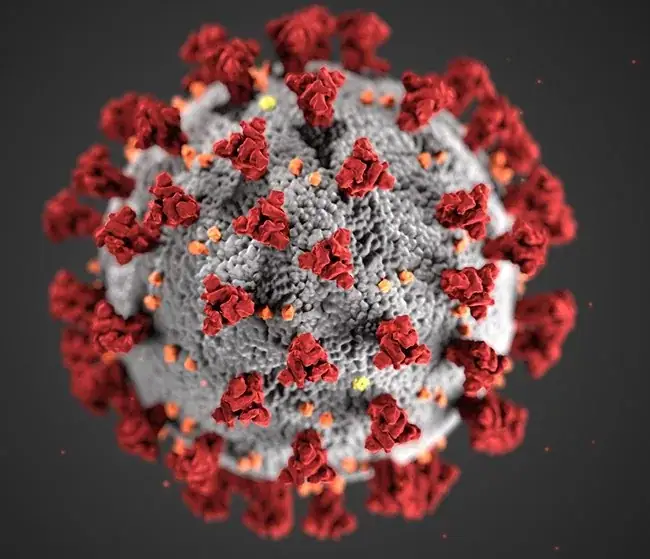
Coronavirus – Caso de Estudo sobre a Nova Pandemia
A Covid-19
é uma doença infeciosa causada pelo vírus SARS-CoV-2 (Síndrome Respiratória Aguda
Grave – Coronavírus 2) e reacendeu um revés que a nossa sociedade não tinha
desde a gripe espanhola de 1918. Pode ser uma memória distante, mas a gripe
espanhola vitimou 50 milhões de pessoas, o equivalente a 200 milhões hoje e
três vezes o número de soldados que morreu durante os quatro anos da Primeira
Guerra Mundial (1). Neste ensaio, pretendo refletir sobre as características
que levaram a que o SARS-CoV2 tenha sido considerado uma “Emergência Global de
Saúde Pública” pela OMS e o que está atualmente a ser feito para detê-lo. A
possibilidade do vírus se tornar uma calamidade tão letal quanto a gripe
espanhola ainda está de pé.
Primeiro,
é crucial entender quais as características de SARS-CoV-2 o tornam tão
dramático. O vírus pertence ao género Coronavírus, que inclui membros que
infetam regularmente os seres humanos, como algumas constipações (cerca de 10-15%,
2) e vírus notavelmente perigosos, como SARS e MERS, capazes de matar 10% e 35%
das suas vítimas, respetivamente (3). No entanto, o vírus da Covid-19 possui
atributos que o diferenciam de todos os outros membros. Por um lado, é menos
contagioso do que as constipações, embora muito mais perigoso. Por outro lado,
não é tão mortal quanto o SARS e o MERS, mas uma pessoa pode transmiti-lo com
ausência ou leve sintomatologia, algo bastante incomum para os outros dois
vírus. Esta última característica foi uma ferramenta crucial na contenção nas
epidemias de SARS e MERS, uma vez que o pessoal médico podia isolar os doentes
quando começavam a exibir sintomas, que coincidia com a altura em que ficavam
contagiosos.
Na
situação do novo coronavírus, os sintomas são facilmente confundidos com viroses
pouco severas e, assim, podem passar desapercebidos na população até haver um
número elevado de casos, como aconteceu em Itália e em diversas outras regiões.
Citando o conceituado imunologista Anthony Fauci, “em infeções, particularmente
infeções respiratórias, quão mais eficiente for um vírus a propagar-se, menor
número de casos fatais terá. É por isso que o surto da gripe H1N1, em 2009, não
foi considerado uma pandemia particularmente grave. O vírus espalhou-se muito,
muito bem, mas a sua taxa de mortalidade foi bastante reduzida." Nesta
entrevista, Fauci alertou que havia exceções à regra, como a já referida gripe
espanhola de 1918, que era consideravelmente contagiosa e fatal. Cem anos
depois, deparamo-nos com outra exceção. Contudo, estes dados não são um indício
que SARS-CoV-2 seguirá as pegadas da gripe espanhola, uma vez que o mundo
avançou, não está assolado pelas condições deploráveis da Grande Guerra e
possui meios mais eficientes para lidar e conter pandemias.
Relativamente
às rotas de transmissão de SARS-CoV-2, ainda não são totalmente conhecidas. Acredita-se
que as pessoas infetadas espalhem a doença principalmente por gotículas de
saliva enquanto espirram, tossem e falam e por fómites (qualquer objeto capaz
de transferir o vírus de um doente para um novo hospedeiro). Como mencionado, a
reduzida sintomatologia de algumas pessoas predispõe-nas a transmitir a doença
sem se aperceberem que têm Covid-19, além de que diversos estudos indicam que o
vírus é capaz de sobreviver em superfícies por vários dias (mais de 3 dias em
plástico/aço inoxidável, até 4 horas em cobre e 24 horas em cartão) e em
aerossol por até 3 horas (4). Outras formas de transmissão, apesar de menos
comuns, podem ser por contato com sangue, matéria fecal e urina contaminados (5).
Sucintamente,
a progressão da Covid-19 varia desde a ausência ou surgimento de sintomas
inespecíficos (como febre, fadiga e tosse seca) até condições potencialmente
fatais, como pneumonia grave, síndrome do desconforto respiratório agudo, sepses
e falência de vários órgãos (6). A Covid-19 é especialmente grave para idosos e
indivíduos com diabetes, doenças cardiovasculares, hipertensão ou cancro (7
& 8). Os homens são mais suscetíveis à doença, provavelmente por as
mulheres terem um sistema imune mais robusto (9, 10, 11 & 12).
Informações
recentes da OMS sugerem que a 'taxa bruta de mortalidade' do Covid-19 é de
cerca de 3 a 4%, dependendo da qualidade do sistema de saúde, da idade média da
população, entre outras variáveis (7). É de salientar o quão cautelosa a OMS aplica
o termo 'bruto', pois dados recentes indicam que a taxa de mortalidade pode ser
muito inferior à atualmente estimada e há duas razões principais para o efeito
(13 & 14). Primeiro, reconhece-se que algumas pessoas não desenvolvem
sintomas severos de Covid-19. Consequentemente, muitos casos leves podem não
ser numerados. A título de exemplo, um estudo chinês mostrou cicatrizes nos
pulmões de um paciente contagioso com o novo coronavírus, embora ele não
apresentasse sintomas. O diagnóstico foi confirmado: pneumonia assintomática
por Covid-19 (15 & 16). Um outro exemplo é um homem de 27 anos do cruzeiro
japonês. Foi confirmado que ele estava infetado com Covid-19 e que havia
apresentado sintomas gripais por quatro dias; no entanto, o estudo concluiu que
ele permaneceu contagioso por mais de duas semanas (17). Estudos posteriores
são necessários para corroborar e determinar a ocorrência de tais situações,
contudo, fica demonstrado uma das características que podem estar a dificultar
a contenção da pandemia.
Dadas as
informações e os casos discutidos, a eficácia das quarentenas implementadas por
vários países pode ser questionada. A China foi certamente bem-sucedida com o isolamento,
mas deve enfatizar-se que os chineses estão mais acostumados a seguir os
cuidados para impedir a propagação de vírus e, mesmo assim, interromperam a sua
economia para conter o SARS-CoV-2. A NASA informou recentemente que as emissões
de gases venenosos para o meio ambiente haviam diminuído drasticamente na China
devido à quarentena do país (18, e, há poucos dias, em Itália). O esforço do
povo chinês parece ter sido gratificante, porém, o enigma permanece: terá sido
suficiente para impedir que o vírus os ameace novamente?
Devemos
considerar profundamente a questão anterior antes de ponderar suspender por
completo a economia da Europa, uma vez que uma nação falida é imensamente mais débil
a enfrentar uma pandemia. É certo que o governo português já mediou tais
consequências e procurou o melhor equilíbrio entre conter a doença e manter
minimamente a sustentabilidade do país, como enunciou o estimado Presidente
Marcelo Rebelo de Sousa: "Só se salvam vidas e saúde se, entretanto, a
economia não morrer”.
Para
responder ao dilema corrente e tendo em conta que as previsões mais otimistas
para a obtenção de uma vacina predizem pelo menos um ano de distância, os
cientistas também devem determinar se os pacientes que superaram a Covid-19 são
imunes a reinfeções pelo vírus. Caso se confirme, a abordagem do Reino Unido de
imunizar naturalmente a população pode ser uma solução realista. Claro que,
para tal fim, as pessoas incluídas nos grupos de maior risco devem evitar a
exposição, como o governo inglês tem sugerido e implementado.
Por fim,
estudos futuros devem ainda concentrar-se em várias incertezas sobre o
Covid-19, especialmente se é possível e plausível contê-lo a longo prazo, clarificar
a taxa de mortalidade média e definir tratamentos medicamentosos para superar
os piores sintomas do vírus (já há alguns em fase experimental).
Luís Telles do Amaral
Academic
English Reading and Writing
19/03/2020
Referências
1 — Patterson, K.D. & Pyle, G. F.
(1991). The geography and mortality of the 1918 influenza pandemic. Bulletin
of the History of Medicine , 65(1): 4–21.
2 — Heikkinen, T. (2003). The common cold. The
Lancet Infectious Diseases , 361(9351): 51-9.
3 — Cascella, M., Rajnik, M., Cuomo, A., et
al . (2020). Features,
Evaluation and Treatment Coronavirus (COVID-19). Treasure Island (FL): StatPearls
Publishing . Available from: https://www.ncbi.nlm.nih.gov/books/NBK554776/
4 — van Doremalen, N., Bushmaker, T., Morris, D.,
Holbrook, M., Gamble, A., Williamson, B., Tamin, A., Harcourt, J., Thornburg,
N., Gerber, S., Lloyd-Smith, J., de Wit, E. & Munster, V. (2020). Aerosol
and surface stability of HCoV-19 (SARS-CoV-2) compared to SARS-CoV-1. Available
from: https://www.medrxiv.org/content/10.1101/2020.03.09.20033217v2.full.pdf+html
5 — Cai, J., Sun, W., Huang, J., Gamber, M., Wu, J.
& He, G. (2020). Indirect virus transmission in cluster of COVID-19 cases,
Wenzhou, China, 2020. Emerging Infectious Diseases , 26(6).
6 — Serviço Nacional de Saúde (2020). Quais são
os sinais e sintomas? SNS 24 . Available from: https://www.sns24.gov.pt/tema/doencas-infecciosas/covid-19/
7 — World Health Organization (2020). Coronavirus disease 2019 (COVID-19). Situation
Report – 46. Available from: https://www.who.int/docs/default-source/coronaviruse/situation-reports/20200306-sitrep-46-covid-19.pdf?sfvrsn=96b04adf_2
8 —
WorldOMeter (2020). Age, Sex, Existing Conditions of COVID-19 Cases and Deaths.
Available from: https://www.worldometers.info/coronavirus/coronavirus-age-sex-demographics/
9 — Karnam,
G., Rygiel, T.P., Raaben, M., Grinwis, G.C.M., Coenjaerts, F.E., Ressing, M.E.,
et al . (2012). CD200 Receptor Controls Sex-Specific TLR7 Responses to
Viral Infection. PLOS Pathogens , 8(5): e1002710.
10 — Peretz,
J., Pekosz, A., Lane, A.P. & Klevin, S.L. (2016). Estrogenic compounds
reduce influenza A virus replication in primary human nasal epithelial cells
derived from female, but not male, donors. American Journal of Physiology ,
310(5).
11 — Taneja
V. (2018). Sex Hormones Determine Immune Response. Frontiers in immunology ,
9: 1931.
12 —
Frodsham, G. (2011). 'Man flu' - do women just have stronger immune systems? BioNews .
Available from: https://www.bionews.org.uk/page_93215
13 —
Wilson, N., Kvalsvig, A., Barnard, L.T. & Baker, M.G. (2020). Case-fatality
estimates for COVID-19 calculated by using a lag time for fatality. Emerging Infectious Diseases , 26(6).
14 —
Kelland, Kate. (2020). Why COVID-19 'Death Rates' Are Not What They Seem. U.S.
News . Available from: https://www.usnews.com/news/world/articles/2020-03-12/why-covid-19-death-rates-are-not-what-they-seem
15 — Lin,
C., Ding, Y., Xie, B., et al . (2020). Asymptomatic novel coronavirus
pneumonia patient outside Wuhan: The value of CT images in the course of the
disease. Clinical Imaging , 63: 7–9.
16 — Shi,
H. & Zheng, C. (2020). Radiological findings from 81 patients with COVID-19
pneumonia in Wuhan, China: a descriptive study. The Lancet Infectious
Diseases . Available from: https://www.sciencedirect.com/science/article/pii/S1473309920300864?via%3Dihub#!
17
— Arashiro, T., Furukawa, K. & Nakamura, A. (2020). COVID-19
in 2 persons with mild upper respiratory tract symptoms on a cruise ship,
Japan. Emerging Infectious
Diseases , 26(6).
18 — NASA.
(2020). Airborne Nitrogen Dioxide Plummets Over China. Earth Observatory:
NASA . Available from: https://www.earthobservatory.nasa.gov/images/146362/airborne-nitrogen-dioxide-plummets-over-china
Coronavirus – A Case Study of the New Pandemic
Covid-19 is an infectious disease caused by the SARS-CoV-2 virus (Severe Acute Respiratory Syndrome – Coronavirus 2) and has revived a setback that our society had not faced since the Spanish flu of 1918. It may be a distant memory, but the Spanish flu claimed 50 million lives—the equivalent of 200 million today—and three times the number of soldiers who died during the four years of the First World War (1). In this essay, I intend to reflect on the characteristics that led SARS-CoV-2 to be considered a “Public Health Emergency of International Concern” by the WHO and on what is currently being done to stop it. The possibility that the virus may become a calamity as lethal as the Spanish flu is still very much alive.
First, it is crucial to understand which characteristics of SARS-CoV-2 make it so dramatic. The virus belongs to the Coronavirus genus, which includes members that regularly infect humans, such as some common colds (around 10–15%, 2), as well as notably dangerous viruses such as SARS and MERS, capable of killing 10% and 35% of their victims, respectively (3). However, the Covid-19 virus has attributes that set it apart from all the other members. On the one hand, it is less contagious than the common cold, although far more dangerous. On the other hand, it is not as deadly as SARS and MERS, but a person can transmit it without symptoms or with only mild symptoms—something quite unusual with the other two viruses. This latter characteristic was a crucial tool in containing the SARS and MERS epidemics, since medical staff could isolate patients when they began to show symptoms, which coincided with the moment when they became contagious.
In the case of the novel coronavirus, the symptoms are easily confused with less severe viruses and may therefore go unnoticed in the population until there is a high number of cases, as happened in Italy and in several other regions. Quoting the renowned immunologist Anthony Fauci: “In infections, particularly respiratory infections, the more efficiently a virus spreads, the lower the number of fatal cases it will have. That is why the H1N1 flu outbreak in 2009 was not considered a particularly serious pandemic. The virus spread very, very well, but its mortality rate was quite low.” In this interview, Fauci warned that there were exceptions to the rule, such as the already-mentioned Spanish flu of 1918, which was considerably contagious and fatal. A hundred years later, we are faced with another exception. However, these data do not indicate that SARS-CoV-2 will follow in the footsteps of the Spanish flu, since the world has advanced, is not afflicted by the deplorable conditions of the Great War and has more efficient means of dealing with and containing pandemics.
Regarding the routes of transmission of SARS-CoV-2, they are still not fully known. It is believed that infected people spread the disease mainly through saliva droplets when they sneeze, cough and speak, and through fomites (any object capable of transferring the virus from a sick person to a new host). As mentioned, the reduced symptoms experienced by some people predispose them to transmitting the disease without realising that they have Covid-19; in addition, several studies indicate that the virus can survive on surfaces for several days (more than 3 days on plastic/stainless steel, up to 4 hours on copper and 24 hours on cardboard) and in aerosols for up to 3 hours (4). Other, less common forms of transmission may occur through contact with contaminated blood, faecal matter and urine (5).
In short, the progression of Covid-19 ranges from the absence or appearance of non-specific symptoms (such as fever, fatigue and a dry cough) to potentially fatal conditions, such as severe pneumonia, acute respiratory distress syndrome, sepsis and multiple-organ failure (6). Covid-19 is particularly serious for elderly people and individuals with diabetes, cardiovascular disease, hypertension or cancer (7 & 8). Men are more susceptible to the disease, probably because women have a more robust immune system (9, 10, 11 & 12).
Recent information from the WHO suggests that the ‘crude mortality rate’ of Covid-19 is around 3 to 4%, depending on the quality of the healthcare system, the average age of the population and other variables (7). It is worth noting how cautiously the WHO applies the term ‘crude’, as recent data indicate that the mortality rate may be much lower than currently estimated, for two main reasons (13 & 14). First, it is recognised that some people do not develop severe Covid-19 symptoms. Consequently, many mild cases may not be counted. For example, a Chinese study showed scarring in the lungs of a patient contagious with the novel coronavirus, even though he had no symptoms. The diagnosis was confirmed: asymptomatic pneumonia caused by Covid-19 (15 & 16). Another example is a 27-year-old man from the Japanese cruise ship. It was confirmed that he was infected with Covid-19 and had experienced flu-like symptoms for four days; however, the study concluded that he remained contagious for more than two weeks (17). Further studies are needed to corroborate and determine how often such situations occur; nevertheless, this demonstrates one of the characteristics that may be making the pandemic difficult to contain.
Given the information and cases discussed, the effectiveness of the quarantines implemented by several countries may be questioned. China was certainly successful with isolation, but it must be stressed that the Chinese are more accustomed to following precautions to prevent the spread of viruses and, even so, they shut down their economy to contain SARS-CoV-2. NASA recently reported that emissions of poisonous gases into the environment had fallen sharply in China because of the country’s quarantine (18, and, a few days ago, in Italy). The Chinese people’s effort appears to have paid off, but the enigma remains: will it have been enough to prevent the virus from threatening them again?
We must think deeply about the previous question before considering shutting down Europe’s economy completely, since a bankrupt nation is vastly weaker when facing a pandemic. It is certain that the Portuguese government has already weighed these consequences and sought the best balance between containing the disease and maintaining the country’s minimum sustainability, as the esteemed President Marcelo Rebelo de Sousa stated: “Lives and health can only be saved if, in the meantime, the economy does not die.”
To address the current dilemma, and bearing in mind that the most optimistic forecasts for obtaining a vaccine predict at least a year’s wait, scientists must also determine whether patients who have overcome Covid-19 are immune to reinfection by the virus. If this is confirmed, the United Kingdom’s approach of naturally immunising the population may be a realistic solution. Naturally, for this purpose, people in the highest-risk groups must avoid exposure, as the English government has suggested and implemented.
Finally, future studies must still focus on several uncertainties surrounding Covid-19, particularly whether it is possible and plausible to contain it in the long term, clarify the average mortality rate and define drug treatments to overcome the virus’s worst symptoms (some are already in the experimental phase).
Luís Telles do Amaral
Academic English Reading and Writing
19/03/2020
References
1 — Patterson, K.D. & Pyle, G. F. (1991). The geography and mortality of the 1918 influenza pandemic. Bulletin of the History of Medicine, 65(1): 4–21.
2 — Heikkinen, T. (2003). The common cold. The Lancet Infectious Diseases, 361(9351): 51-9.
3 — Cascella, M., Rajnik, M., Cuomo, A., et al. (2020). Features, Evaluation and Treatment Coronavirus (COVID-19). Treasure Island (FL): StatPearls Publishing. Available from: https://www.ncbi.nlm.nih.gov/books/NBK554776/
4 — van Doremalen, N., Bushmaker, T., Morris, D., Holbrook, M., Gamble, A., Williamson, B., Tamin, A., Harcourt, J., Thornburg, N., Gerber, S., Lloyd-Smith, J., de Wit, E. & Munster, V. (2020). Aerosol and surface stability of HCoV-19 (SARS-CoV-2) compared to SARS-CoV-1. Available from: https://www.medrxiv.org/content/10.1101/2020.03.09.20033217v2.full.pdf+html
5 — Cai, J., Sun, W., Huang, J., Gamber, M., Wu, J. & He, G. (2020). Indirect virus transmission in cluster of COVID-19 cases, Wenzhou, China, 2020. Emerging Infectious Diseases, 26(6).
6 — Serviço Nacional de Saúde (2020). What are the signs and symptoms? SNS 24. Available from: https://www.sns24.gov.pt/tema/doencas-infecciosas/covid-19/
7 — World Health Organization (2020). Coronavirus disease 2019 (COVID-19). Situation Report – 46. Available from: https://www.who.int/docs/default-source/coronaviruse/situation-reports/20200306-sitrep-46-covid-19.pdf?sfvrsn=96b04adf_2
8 — WorldOMeter (2020). Age, Sex, Existing Conditions of COVID-19 Cases and Deaths. Available from: https://www.worldometers.info/coronavirus/coronavirus-age-sex-demographics/
9 — Karnam, G., Rygiel, T.P., Raaben, M., Grinwis, G.C.M., Coenjaerts, F.E., Ressing, M.E., et al. (2012). CD200 Receptor Controls Sex-Specific TLR7 Responses to Viral Infection. PLOS Pathogens, 8(5): e1002710.
10 — Peretz, J., Pekosz, A., Lane, A.P. & Klevin, S.L. (2016). Estrogenic compounds reduce influenza A virus replication in primary human nasal epithelial cells derived from female, but not male, donors. American Journal of Physiology, 310(5).
11 — Taneja V. (2018). Sex Hormones Determine Immune Response. Frontiers in immunology, 9: 1931.
12 — Frodsham, G. (2011). ‘Man flu’ - do women just have stronger immune systems? BioNews. Available from: https://www.bionews.org.uk/page_93215
13 — Wilson, N., Kvalsvig, A., Barnard, L.T. & Baker, M.G. (2020). Case-fatality estimates for COVID-19 calculated by using a lag time for fatality. Emerging Infectious Diseases, 26(6).
14 — Kelland, Kate. (2020). Why COVID-19 ‘Death Rates’ Are Not What They Seem. U.S. News. Available from: https://www.usnews.com/news/world/articles/2020-03-12/why-covid-19-death-rates-are-not-what-they-seem
15 — Lin, C., Ding, Y., Xie, B., et al. (2020). Asymptomatic novel coronavirus pneumonia patient outside Wuhan: The value of CT images in the course of the disease. Clinical Imaging, 63: 7–9.
16 — Shi, H. & Zheng, C. (2020). Radiological findings from 81 patients with COVID-19 pneumonia in Wuhan, China: a descriptive study. The Lancet Infectious Diseases. Available from: https://www.sciencedirect.com/science/article/pii/S1473309920300864?via%3Dihub#!
17 — Arashiro, T., Furukawa, K. & Nakamura, A. (2020). COVID-19 in 2 persons with mild upper respiratory tract symptoms on a cruise ship, Japan. Emerging Infectious Diseases, 26(6).
18 — NASA. (2020). Airborne Nitrogen Dioxide Plummets Over China. Earth Observatory: NASA. Available from: https://www.earthobservatory.nasa.gov/images/146362/airborne-nitrogen-dioxide-plummets-over-china
- Vinhos do Mundo
Galeria
Comentários (3)
Deixar um comentário
Comentário enviado
Vai ser publicado depois de ser aprovado. Obrigada pela partilha!
O comentário não foi enviado
Houve um problema a falar com o servidor. Tenta outra vez daqui a pouco — o que escreveste continua aí.



António Picotês 20 de março de 2020
Muito bom artigo! Simples, muito informativo e bem escrito.
Parabéns Luís Telles do Amaral!
Nuno 20 de março de 2020
Profundo, assertórico e fácil de compreender.
E num blog de vinho!
Susana 20 de março de 2020
Informação de qualidade nunca é demais, mesmo num blog de vinhos! Obrigada Luís