A Casa de Cello e a fermentação dos mostos
Visitas 0
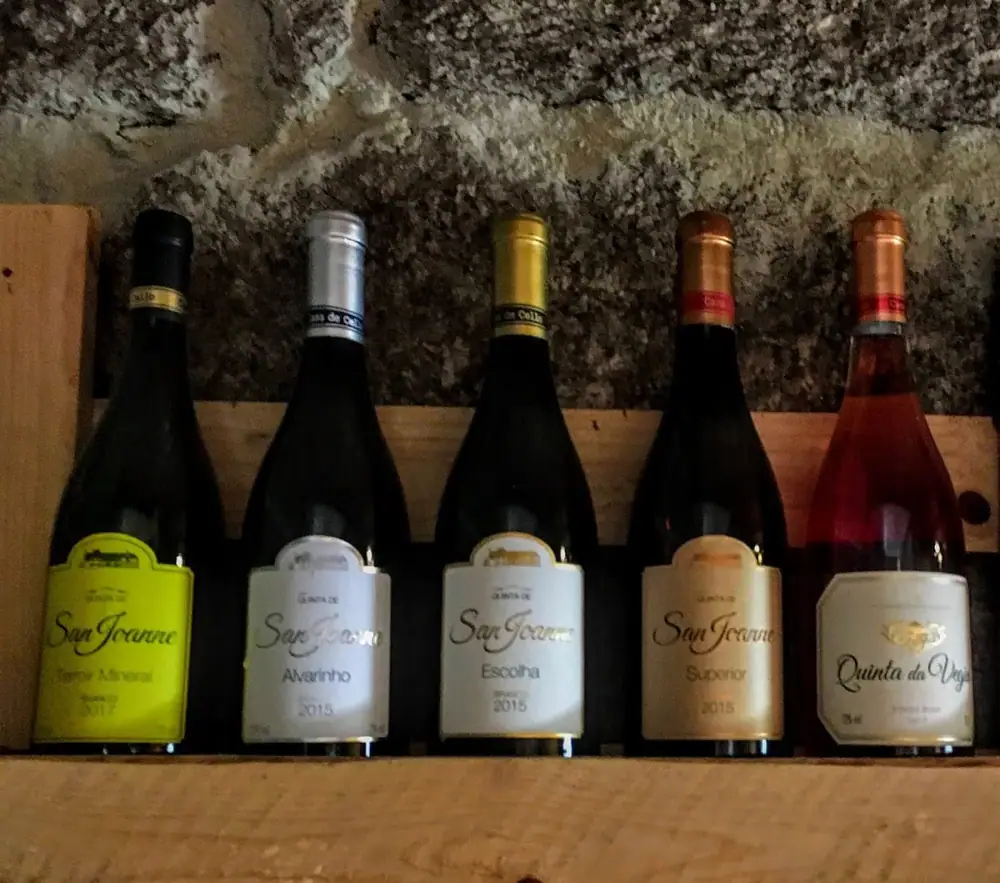
Mais um ano nesta quinta, Casa de Cello , em que os vinhos têm a primazia de serem — fruto da filosofia do dono João Pedro Araújo —, vinhos honestos. Este pretende que os seus vinhos sejam conhecidos pelo que oferecem, daí a escolha de nomes originais que aparecem nos rótulos, como é o caso de Terroir Mineral, Solo Franco, Lote, entre outros, e que nos levam para o universo da terra e da natureza.
A visita em Cello mostrou-me vinhas a caminhar para o descanso, o repouso vegetativo . Apreciei o acastanhar das folhas das vinhas de uvas tintas e o amarelar das folhas das uvas de vinhos brancos. A Casa de Cello, é o coração do projeto. À sua volta crescem alegremente as vinhas das castas Arinto, Alvarinho, Avesso, Trajadura, Malvasia Fina e Loureiro , que pertencem à Quinta de Sanjoanne.
Chegadas à adega, a Tatiana Vale, a eterna apaixonada pela casa, e uma das caras do projeto contou-me que tinham semeado uma vinha infértil a forrar as paredes exteriores da adega, construída
na continuação da Eira de pedra existente na quinta, para baixar a sua temperatura interior.
O que me cativou a atenção foi o aroma do ar. Era fermentativo, vivo, odoroso... Nas cubas por lá espalhadas, havia castas distintas em diferentes períodos de fermentação que cheirei e provei.
Um pouco de história para winephilos | A fermentação
A fermentação é o fenómeno onde o açúcar das uvas esmagadas, a que se chama mosto , se transforma em álcool.
É muito comum que, durante a vindima, os viticultores avaliem a qualidade das suas uvas e dos seus mostos pela percentagem de açúcares concentrados na maturação (amadurecimento). Quanto mais açúcar as uvas possuírem, maior será o seu valor comercial, pois dará um bom teor alcoólico no vinho.
O açúcar existente no mosto é composto, entre outras coisas, por glucose e frutose ( os açúcares fermentáveis da uva) e leveduras , que reagindo dão início à fermentação.
Com o início da fermentação, pela atividade das leveduras, o mosto turva, aquece e começa a libertar bolhas.
Lavoisier ( 1743-1794) , o pai da química moderna, que morreu guilhotinado, disse através da observação desta reação (entre outras observações e estudos), que " Na natureza nada se cria, nada se perde, tudo se transforma" por ação do oxigénio.
Mais tarde, Pasteur (1822-1895) contestou a teoria da geração espontânea de Aristóteles ( 384A.C.-322A.C) , ao perceber que a ação das leveduras era um processo orgânico em vez de químico, ou seja, o processo dependia de microrganismos.
Resumidamente, o vinho e o seu processo de vinificação são parcialmente responsáveis pela evolução da química e da biologia.
Normalmente, as leveduras usadas na vinificação são leveduras autóctones — as existentes no interior da uva — embora por vezes, e por diversos motivos, se acrescentem ao mosto leveduras comerciais . Estas últimas são leveduras cultivadas com características determinadas, como por exemplo, aumentar o teor alcoólico, a produção de um aroma particular, entre outros.
Um pormenor interessante é que as leveduras precisam de 17,5 gramas por litro de açúcar no mosto para produzirem 1% de álcool, o que significa que, por exemplo, para um vinho ter 14% de álcool, é necessário cerca de 245 gramas por litro de açúcar.
Durante a fermentação há libertação de calor , e a temperatura na qual o processo decorre interfere no resultado final do vinho. Temperaturas entre 24ºC e 32ºC melhoram a extração de compostos da casca da uva tinta, resultando em vinhos tintos com maior concentração fenólica, ou seja, mais corpo e cor. As uvas brancas fermentam entre 14ºC e 18ºC, obtendo-se um vinho branco com aromas mais finos e elegantes.
Para temperaturas abaixo de 13º/14ºC, o arranque da fermentação é quase impossível de acontecer. E, para temperaturas superiores a 35ºC, as leveduras param e morrem.
O controlo da temperatura na fermentação é, assim muito importante. Exige uma atenção rigorosa por parte da equipa de enologia, por vezes sendo necessário instalar cintas térmicas em volta dos tanques, ou colocar serpentinas no seu interior, para que circule um fluído refrigerante, e assim baixar a temperatura.
De uma forma natural, a fermentação finaliza quando os açúcares do mosto acabam. Isto significaria que todos os vinhos teriam baixo teor de açúcares no final do processo. Há diferentes estilos de vinhos em que alguns possuem teores de açúcares elevados. Para que isso aconteça, é necessário interromper o trabalho das leveduras.
Pode fazer-se isso de diferentes métodos. Um dos mais comuns é filtrar o mosto e retirar as leveduras, o que finaliza a fermentação.
Um outro método é o aumento ou diminuição da temperatura . Se aumentar a temperatura, matam-se as leveduras, ou se reduzir, cessa-se a fermentação. Contudo, a temperatura elevada prejudica os aromas do produto e a temperatura baixa não mata as leveduras, apenas as hiberna. A fermentação é um dos trabalhos mais exigentes para o enólogo e a sua equipa de enologia, e todos os parâmetros tem que ser levados em consideração, juntos, e minuto a minuto. Este processo é dos mais importantes na obtenção de um Bom vinho.
A fermentação da uva abrange muitos detalhes, e aqui tentei focar alguns.
Voltando à visita...
Durante a fermentação dão-se mais de trinta reações químicas, com diferentes enzimas , "as ferramentas" das leveduras, e o mosto apresenta estágios diferentes. Foi nestes diferentes momentos que retirei amostras de cuba para cheirar e analisar.
Uma amostra era ainda "Sumol de ananás", como brinquei na altura, pois era o que me recordava a sua prova. Outros tinham demasiado bolhinhas, outros demasiado opacos, outro (que provei!) cheirava a ovos e couves cozidos, ughhh...
Foi interessante ver e aperceber-me dos diferentes estágios do mosto até ser vinho.
Para terminar em glória, provei os vinhos da colheita nova da prova que apresentei em "Hoje o mimo é..." , a 20 de setembro de 2020.
Depois da visita à Quinta de Sanjoanne e à Casa de Cello da região do Vinho Verde, subimos à sala de prova onde degustei com a Tatiana, os vinhos da Quinta da Vegia, o projeto que possuem n a região do Dão e onde a filosofia se mantém.
As notas de prova do meu Livrinho
O primeiro vinho que provámos foi o Quinta da Vegia Solo Franco 2016.
O aspecto deste vinho do Dão é límpido e de cor rubi escura.
No nariz, sente-se a frescura da fruta escura. Este vinho com 4 anos tem uma intensidade aromática média alta.
Neste ano, o blend de castas foi feito com Touriga Franca (50%), Touriga
Nacional (40%), e Tinta Amarela (10%). Na boca é um vinho seco, com uma acidez presente, taninos vivos e médios. O grau alcoólico está em 14%, e encontra-se bem integrado. É um vinho com o PVP de 8€, de boa intensidade, corpo médio, fruta vermelha madura e final feliz. É sempre uma aposta segura quando o vejo num cardápio, ou nas prateleiras de uma garrafeira.
O segundo vinho provado foi o Quinta da Vegia Lote 2017 .
Considero-o mais elegante que o anterior, e as castas usadas naquele ano foram Tinta Roriz (60%) e Touriga Nacional (40%). O nariz de intensidade aromática média alta, remete o seu aroma para fruta preta.
O seu PVP é de 15€, com taninos mais elegantes, a acidez mais equilibrada e os aromas deliciosos para se se quiser acompanhar umas entradas ou uma boa conversa.
Uma casa que gosto de acompanhar e que me recebe sempre bem.
Chim chim, Cello!
Até breve ,
Menina do Livrinho . wine
Legenda de cores : termos técnicos - verde; castas - preto bold; vinhos - azul
Another year at this quinta, Casa de Cello, where the wines have the privilege of being honest wines — the result of their owner João Pedro Araújo’s philosophy. He wants his wines to be known for what they offer, hence the choice of original names that appear on the labels, such as Terroir Mineral, Solo Franco and Lote, among others, taking us into the world of the land and nature.
A visit to Cello showed me vineyards preparing for their rest, their vegetative dormancy. I admired the browning leaves of the red-grape vines and the yellowing leaves of the white-grape vines. Casa de Cello is the heart of the project. Around it, the Arinto, Alvarinho, Avesso, Trajadura, Malvasia Fina and Loureiro grape varieties belonging to Quinta de Sanjoanne grow happily.
When we arrived at the winery, Tatiana Vale, the house’s eternal devotee and one of the faces of the project, told me that they had planted a barren vineyard to cover the winery’s exterior walls. The building was constructed as an extension of the existing stone Eira at the quinta, in order to lower its interior temperature.
What captured my attention was the aroma in the air. It was fermentative, alive, fragrant... In the tanks scattered around the winery, there were different grape varieties at different stages of fermentation, which I smelled and tasted.
A little history for winephilos | Fermentation
Fermentation is the phenomenon in which the sugar in crushed grapes, known as must, is transformed into alcohol.
During the harvest, it is very common for winegrowers to assess the quality of their grapes and must by the percentage of sugars concentrated during ripening. The more sugar the grapes contain, the greater their commercial value, since they will produce a good alcohol content in the wine.
The sugar in the must is composed, among other things, of glucose and fructose — the grape’s fermentable sugars — and yeasts, which react and initiate fermentation.
When fermentation begins, the activity of the yeasts makes the must cloudy, warms it up and causes it to start releasing bubbles.
Lavoisier (1743-1794), the father of modern chemistry, who died by guillotine, said, through observing this reaction — among other observations and studies — that “Nothing is created, nothing is lost, everything is transformed” through the action of oxygen.
Later, Pasteur (1822-1895) challenged Aristotle’s (384 B.C.-322 B.C.) theory of spontaneous generation when he realised that the action of yeasts was an organic rather than a chemical process; in other words, that the process depended on microorganisms.
In short, wine and its winemaking process are partly responsible for the development of chemistry and biology.
Normally, the yeasts used in winemaking are indigenous yeasts — those found inside the grape — although, sometimes and for various reasons, commercial yeasts are added to the must. These are cultivated yeasts with specific characteristics, such as increasing the alcohol content or producing a particular aroma, among other things.
An interesting detail is that yeasts need 17.5 grams of sugar per litre of must to produce 1% alcohol. This means that, for example, for a wine to have 14% alcohol, around 245 grams of sugar per litre are needed.
During fermentation, heat is released, and the temperature at which the process takes place affects the final result of the wine. Temperatures between 24ºC and 32ºC improve the extraction of compounds from the skins of red grapes, resulting in red wines with greater phenolic concentration — in other words, more body and colour. White grapes ferment between 14ºC and 18ºC, producing a white wine with finer, more elegant aromas.
At temperatures below 13º/14ºC, fermentation is almost impossible to start. And at temperatures above 35ºC, the yeasts stop working and die.
Controlling the temperature during fermentation is therefore extremely important. It requires rigorous attention from the winemaking team and, sometimes, it is necessary to install thermal belts around the tanks or place cooling coils inside them, allowing a refrigerant fluid to circulate and lower the temperature.
Naturally, fermentation ends when the sugars in the must run out. This would mean that all wines had a low sugar content at the end of the process. There are different wine styles, some of which have high sugar levels. For that to happen, the yeasts’ work must be interrupted.
This can be done in different ways. One of the most common is to filter the must and remove the yeasts, which brings fermentation to an end.
Another method is to raise or lower the temperature. If the temperature is raised, the yeasts are killed; if it is lowered, fermentation ceases. However, high temperatures damage the product’s aromas, while low temperatures do not kill the yeasts — they merely put them into hibernation. Fermentation is one of the most demanding tasks for the winemaker and the winemaking team, and all the parameters must be considered together, minute by minute. This is one of the most important processes in obtaining a good wine.
Grape fermentation involves many details, and here I have tried to focus on a few of them.
Back to the visit...
During fermentation, more than thirty chemical reactions take place, involving different enzymes — “the tools” of the yeasts — and the must goes through different stages. It was at these different moments that I took samples from the tanks to smell and analyse.
One sample was still “pineapple Sumol”, as I joked at the time, because that was what it reminded me of when I tasted it. Others had far too many little bubbles, others were far too opaque, and another one — which I tasted! — smelled of eggs and boiled cabbage, ughhh...
It was fascinating to see and become aware of the different stages the must goes through before becoming wine.
To end on a high note, I tasted the wines from the new vintage featured in the tasting I presented in “Hoje o mimo é...”, on 20 September 2020.
After visiting Quinta de Sanjoanne and Casa de Cello in the Vinho Verde region, we went up to the tasting room, where I tasted, together with Tatiana, the wines from Quinta da Vegia, the project they own in the Dão region, where the same philosophy is maintained.
My Livrinho tasting notes
The first wine we tasted was Quinta da Vegia Solo Franco 2016.
This Dão wine is clear, with a dark ruby colour.
On the nose, there is the freshness of dark fruit. At four years old, this wine has medium-high aromatic intensity.
That year, the blend was made with Touriga Franca (50%), Touriga Nacional (40%) and Tinta Amarela (10%). On the palate, it is a dry wine, with noticeable acidity and lively, medium-bodied tannins. The alcohol content is 14%, and it is well integrated. It is a wine with an RRP of 8€, offering good intensity, medium body, ripe red fruit and a happy finish. It is always a safe bet when I see it on a menu or on the shelves of a wine shop.
The second wine tasted was Quinta da Vegia Lote 2017.
I consider it more elegant than the previous one, and the grape varieties used that year were Tinta Roriz (60%) and Touriga Nacional (40%). The nose has medium-high aromatic intensity, with aromas that point towards black fruit.
Its RRP is 15€, with more elegant tannins, more balanced acidity and delicious aromas to enjoy with some appetisers or a good conversation.
A house I enjoy following and which always makes me feel welcome.
Chim chim, Cello!
Until soon,
Menina do Livrinho . wine
Colour key: technical terms — green; grape varieties — bold black; wines — blue
- Vinho Verde
- Dão
- Touriga Nacional
- Touriga Franca
- Tinta Roriz
- Arinto
- Loureiro
- Alvarinho
- Avesso
- Malvasia
- Aristóteles
- Casa de Cello
- João Pedro Araújo
- Lavoisier
- Pasteur
- Quinta da Vegia Lote 2017
- Quinta da Vegia Solo Franco
- controlo de temperatura
- fermentação
- leveduras
Galeria
Comentários (0)
Este artigo ainda não tem comentários.
Deixar um comentário
Comentário enviado
Vai ser publicado depois de ser aprovado. Obrigada pela partilha!
O comentário não foi enviado
Houve um problema a falar com o servidor. Tenta outra vez daqui a pouco — o que escreveste continua aí.